
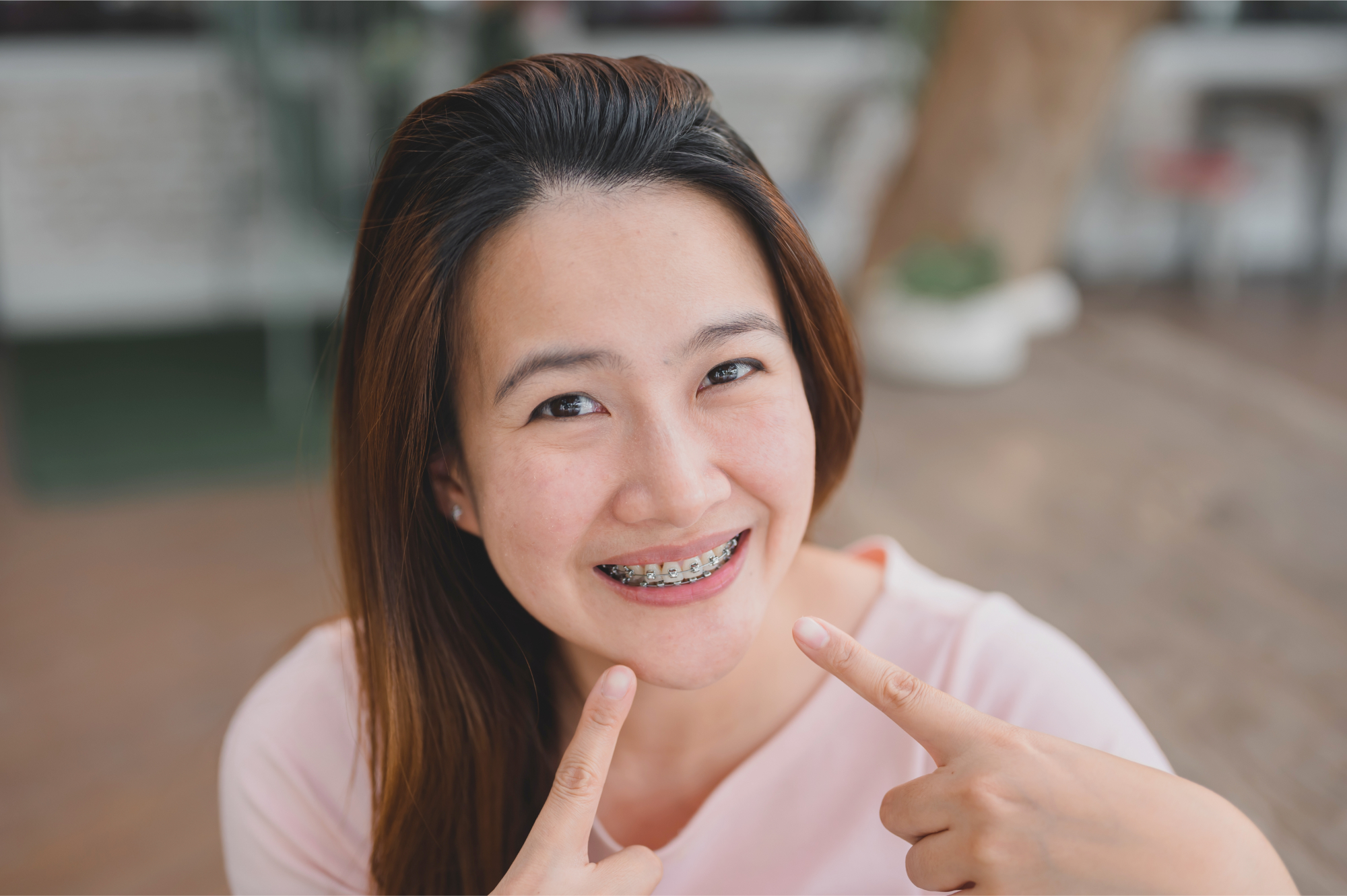
What Is Adult Orthodontic Treatment?
Are you too old for braces? Adult orthodontic treatment has no upper age limit. Healthy teeth and gums matter far more than the number on your driver’s license. Bone remodels throughout life, so teeth respond to gentle pressure at 25, 45, or 75. If your gums are healthy, braces for adults are on the table.
Adults now make up a significant share of the patient family in orthodontic practices, and that share has been climbing steadily for years. Many of them waited a decade or three before making the call.
Most adults come in for one of four reasons:
- Crowding that has slowly gotten worse over the years
- Spacing or gaps they’ve never liked in photos
- Bite issues like an overbite, underbite, or crossbite
- Relapse after childhood braces, usually from retainers that stopped being worn
Every one of those is treatable in adulthood. The appliance just has to match the case.
Your options at Aviate Orthodontics include KLŌwen custom braces in metal or clear, plus Angel Aligners for patients who’d rather fly under-the-radar. Dr. Andrew Dinh reviews all of them with you before anything is bonded or delivered.
What changes with age isn’t your ability to move your smile. It’s the planning around it. Adults bring fillings, crowns, older restorations, and sometimes a history of gum treatment into the equation, and those details shape the plan. None of that makes adult care harder to deliver. It simply means the sequence gets mapped carefully before your first visit ends.
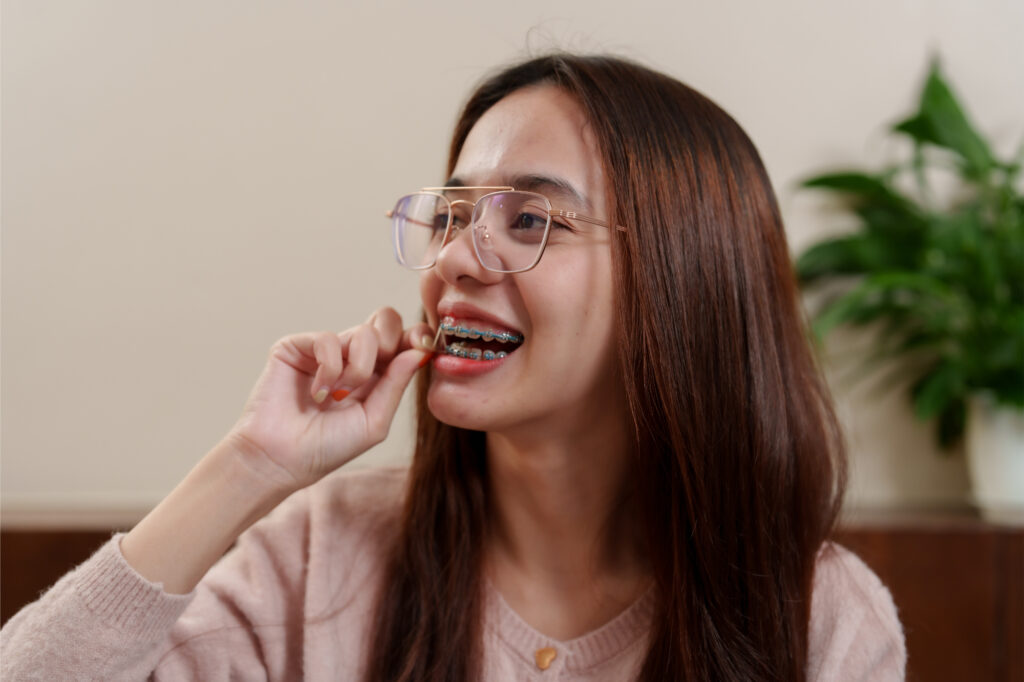
How Adult Orthodontic Treatment Works, Step by Step
Adult orthodontic care follows five stages: a free consultation with records, a custom plan, appliance placement, periodic adjustments, and retention. Most adults finish in 12 to 30 months depending on case complexity. Gum health has to be stable before any tooth movement begins, so periodontal screening happens first.
What Happens at Your Free Consultation?
Your first visit includes an exam, 3D scans, and X-rays. The scans replace goopy impression trays. X-rays let Dr. Dinh see root position, bone levels, and how your jaws relate to each other, which matters more in adult cases than most people expect.
How Is Your Custom Plan Built?
Dr. Dinh maps out tooth movement and shows you a simulated outcome along with an estimated timeline. You’ll see what’s realistic, what requires extra steps, and what your finished bite should look like.
What Happens When Your Appliance Is Placed?
Braces are bonded using KLŌwen custom digital bracket placement, which positions each bracket based on your anatomy rather than eyeballing it in the chair. Aligner patients receive their first Angel Aligners trays and wear instructions. Neither visit takes long.
How Often Will You Come In for Visits?
Braces patients return every four to eight weeks for wire changes. Aligner patients switch trays about every one to two weeks at home and check in less often. Dr. Dinh personally sees you at every visit, so nothing gets handed off.
Why Does Retention Matter After Your Care Ends?
Retainers hold your result. Adult bone doesn’t “lock in” the way many people assume, and teeth drift for life. Nightly wear keeps your smile where you parked it.
Benefits of Straightening Your Teeth as an Adult
Adults who move their smiles gain five clear benefits: easier daily cleaning, better bite function, improved chewing and speech, a stronger foundation for future dental work, and more confidence in everyday situations. Straight teeth aren’t just about photos. The health payoff is real, and it shows up in ordinary moments, like flossing a back molar without a fight or biting into something without favoring one side of your mouth.
- Easier cleaning. Aligned teeth make brushing and flossing more effective, which lowers your risk of decay and gum disease.
- Better bite function. Correcting your bite distributes chewing forces evenly and reduces uneven wear, chipping, and strain on your jaw joints. Fixing a crossbite in your 40s may spare you a cracked molar and a crown two decades later.
- Improved chewing and speech. Patients with significant bite discrepancies often notice both improve once the bite settles.
- A better foundation for future dental work. Crowns, implants, and veneers turn out better when the teeth around them sit in the right place. Many general dentists refer adults for orthodontic care specifically for this reason.
- Confidence at work and in your personal life. Plenty of adults tell us they stopped covering their mouth in meetings and photos.
One more thing worth saying out loud: adults tend to be the most motivated patients in the practice. You’re choosing this. That shows up in wear time, hygiene, and results.
Adult vs. Child and Teen Orthodontics: What’s Different
The biggest difference is growth. Kids and teens have developing jaws, which gives an orthodontist a window to guide bone growth with appliances like palatal expanders. Adults have fully formed bone, so a small number of skeletal corrections need surgical orthodontics instead of an appliance alone.
That’s not a barrier for most people. It only changes how the plan gets built.
| Factor | Children & Teens | Adults |
|---|---|---|
| Jaw growth | Active growth allows expansion and growth guidance | Growth complete; skeletal corrections may need surgery |
| Treatment time | Often shorter, growth assists movement | Sometimes slightly longer |
| Appliance options | Braces, aligners, expanders, space maintainers | KLŌwen custom braces in metal or clear, Angel Aligners, surgical orthodontics |
| Case complexity | Fewer restorations to work around | Crowns, bridges, missing teeth, worn enamel factored in |
| Monitoring | Focus on eruption and jaw development | Closer periodontal (gum and bone) monitoring |
Adults also face a few realities kids don’t. Missing teeth may need space managed for a future implant. Older restorations sometimes need replacing after treatment. Worn enamel from years of an uneven bite may call for coordination with your general dentist.
Discreet Options for Working Adults
The concern we hear most from adults isn’t whether treatment will work. It’s whether they’ll spend the next two years explaining their mouth to clients and coworkers. That’s a fair thing to weigh, and it usually decides which appliance goes on.
KLŌwen custom clear braces use tooth-colored ceramic brackets that read as far less obvious than metal across a conference table. Dr. Dinh typically places clear brackets on the upper teeth, where they show, and metal on the lower and back teeth, where they don’t and where the extra durability helps.
Angel Aligners go a step further. The trays are removable, so they come out for a client lunch or a presentation and go back in afterward. That flexibility comes with a trade. Aligners only work if they’re in your mouth roughly 20 to 22 hours a day, and a few complex movements are handled more predictably with brackets.
Neither option is universally better. Which one suits you comes down to your case and your week, and that’s a conversation worth having before you decide.
Are You a Good Candidate for Braces as an Adult?
Good candidates for adult braces have healthy gums, adequate bone support, and no untreated decay. Age itself isn’t a disqualifier. Periodontal health is the real gatekeeper. Patients in their 40s, 50s, 60s, and beyond move their smiles successfully every year, as long as the foundation underneath is stable.
Concerns commonly treated in adults:
- Crowding and overlapping front teeth
- Gaps and spacing
- Overbite, underbite, and crossbite
- Open bite and deep bite
- Relapse after childhood braces
- Space management before an implant or bridge
A few situations call for extra coordination:
- Active gum disease needs to be controlled before tooth movement starts, then monitored throughout care.
- Missing teeth or extensive restorations may require planning alongside your general dentist or specialist.
- Significant skeletal discrepancies may point toward surgical orthodontics, which combines orthodontic care with corrective jaw surgery.
None of that rules you out. It just means your plan has more moving parts. Plenty of adults arrive convinced they missed their window by twenty years, and the exam usually says otherwise. A records visit answers that question honestly instead of leaving you to guess at it.
Who Will You See at Your Free Consultation?
Dr. Andrew Dinh is a board-certified orthodontist through the American Board of Orthodontics. He earned his undergraduate degree at the University of California, Irvine, his dental degree at Western University of Health Sciences, and completed orthodontic specialty training at Roseman University of Health Sciences, graduating with honors. He is a member of Omicron Kappa Upsilon, the national dental honor society, and holds memberships with the American Association of Orthodontists, the American Board of Orthodontics, the California Association of Orthodontists, and the Pacific Coast Society of Orthodontists.
He’s also the sole provider here, which means he personally sees every member of our patient family at every visit. A free virtual consultation is available if you’d rather look over your options from home first.
Frequently Asked Questions About Adult Braces
Is there an age limit for braces?
No. There is no upper age limit for orthodontic care. Teeth move at any age because the bone surrounding them remodels throughout life. What matters is the condition of your gums, the strength of the bone holding each tooth in place, and whether any decay needs attention first, which is why a records visit comes before any treatment decision.
How long do adult braces take?
Most adult cases run about 12 to 30 months. Minor crowding or spacing can finish faster, while full bite corrections and cases involving surgical orthodontics take longer. An orthodontist gives you an estimated timeline at your consultation, based on your scans and X-rays rather than an average.
Do braces hurt more as an adult?
No. Adults report about the same experience as teens, which is mild soreness for a few days after placement and after adjustments, then it fades. Over-the-counter relief and soft foods handle it. Custom bracket placement and modern wires make the process more comfortable than older systems.
Can I get clear aligners instead of metal braces?
Often, yes. Clear aligners handle many adult cases, including crowding, spacing, and a range of bite corrections. It is not a universal answer. Some rotations, significant bite discrepancies, and complex movements are handled more predictably with braces. An orthodontist can tell you which fits your case after reviewing your records.
Will braces damage my teeth or gums?
Not with good hygiene and professional monitoring. Decalcification and gum inflammation happen when plaque sits around brackets, not because of the braces themselves. Brush thoroughly, floss daily, keep your dental cleanings, and attend your progress visits. Adults with a history of gum disease get closer monitoring throughout care.
Do I have to wear a retainer forever?
Essentially, yes. Teeth shift throughout life whether or not you have had braces. Nightly retainer wear over the long term is what keeps your result stable.
Start Your Adult Orthodontic Treatment in Irvine
If you have been wondering whether you missed your window, a free consultation is the fastest way to get a real answer. Dr. Dinh will walk through your options, your timeline, and what your finished bite should look like, with no commitment attached. You can start in person at our Irvine office or from home with a virtual consult.