

Do Clear Braces Stain? The Short Answer
Ceramic brackets themselves resist staining, but the clear elastic ties holding the wire in place do absorb color from food and drink. Those ties get replaced at every visit, so any discoloration is temporary and easy to reset.
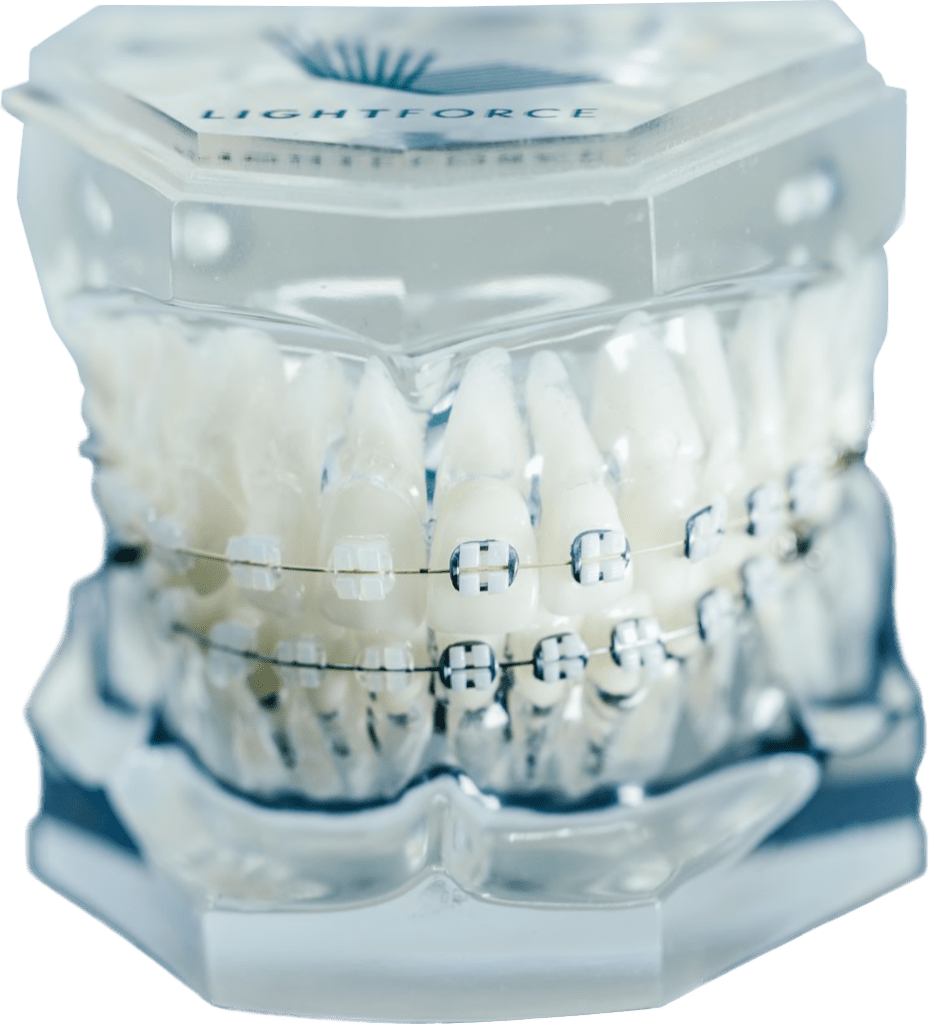
Clear braces work the same way metal braces do. Small tooth-colored ceramic or porcelain brackets are bonded to the front of each tooth, then connected by a wire that guides your teeth into position. The difference is purely visual, since ceramic blends with enamel instead of standing out against it. At Aviate Orthodontics in Irvine, it’s one of the most common questions we hear before someone launches a new smile.
Three separate parts get lumped together when people say “stained braces”:
- The brackets. Ceramic and porcelain are color-stable. They don’t soak up pigment the way softer plastics do.
- The elastic ligature ties. These tiny rubber bands hold the wire to each bracket. They’re porous, and they will pick up color.
- The enamel around the brackets. Plaque left sitting along bracket edges can leave marks that have nothing to do with the braces.
Only one of those three is truly a staining risk, and it’s the one swapped out at every visit.
What Actually Causes Clear Braces to Look Stained
Clear braces look stained mostly because of the elastic ties, which are porous and soak up pigment from coffee, tea, red wine, curry, and berries. Plaque buildup around brackets adds a second layer of discoloration. The ceramic brackets themselves stay color-stable, though abrasive whitening pastes can dull their polish over time.
Here’s what’s happening at each level:
- Pigmented foods and drinks. Coffee, black tea, red wine, curry, tomato sauce, soy sauce, blueberries, and beets are the usual suspects. The deeper the color, the faster the ties absorb it.
- Smoking and vaping. These cause the fastest and most stubborn yellowing of elastic ties by a wide margin. Nicotine and tar bind to the elastic and don’t rinse away.
- Plaque accumulation. Brackets create ledges where plaque collects. Left alone, that buildup can cause white spot lesions or a dark halo around each bracket, which reads as staining even when the ceramic is spotless.
- Excess bonding adhesive. If extra composite is left at the bracket margins, that material can pick up stain more readily than the ceramic itself. Careful bonding technique prevents most of this.
- Abrasive toothpaste. Whitening pastes and charcoal products scratch the polished surface of ceramic brackets. Microscopic scratches trap pigment and make brackets look cloudy.
Timing matters here. Elastic ties typically start showing noticeable discoloration somewhere around the four to six week mark, which lines up closely with a standard adjustment interval. That’s not a coincidence. The schedule is built so your ties come off before they’ve had time to look rough.
One more thing worth understanding: staining on ties is cosmetic only. It doesn’t slow your progress, weaken the bracket bond, or affect how your teeth move.
How to Keep Clear Braces Looking Clear
Keeping clear braces clear comes down to a few daily habits: brush after meals, rinse after pigmented drinks, skip abrasive whitening pastes, and keep your regular visits. None of it takes much time, and the payoff is brackets and ties that stay looking fresh between visits.
- Brush after meals. A quick two minutes after eating removes pigment before it settles into the elastics. Carry a travel brush.
- Rinse with water immediately after coffee, tea, or dark sauces. Swish for a few seconds. This alone makes a visible difference over a six week stretch.
- Use a straw for staining beverages. Iced coffee, cold brew, and dark sodas do the most damage to front brackets. A straw routes them past the visible zone.
- Pick a non-abrasive, non-whitening fluoride toothpaste. Protecting the polish on your ceramic brackets keeps them from going cloudy.
- Clean around brackets every day. An interdental brush, floss threader, or water flosser reaches the spots a regular toothbrush misses. This is what prevents enamel marks, not just tie discoloration.
- Keep your adjustment visits. Fresh ties at every visit mean discoloration never has time to build.
- Skip smoking and vaping. There’s no cleaning routine that reverses the yellowing these cause.
- Limit sticky, pigmented snacks between brushings. Gummy candy and dried fruit press pigment directly into the elastic.
A practical note from the chair: patients who rinse after every colored drink almost always show up at their next visit with ties that still look clear. It’s the single highest-return habit on this list, and it takes about five seconds.
How Staining Compares Across Treatment Options
Each option carries a different kind of discoloration risk. This is a staining comparison only. If you’re weighing the options more broadly, we’ve covered metal braces against clear braces and clear braces against clear aligners separately.
Metal braces have zero bracket staining concerns. Stainless steel doesn’t absorb pigment. The enamel around brackets still needs the same daily attention, though, so hygiene matters just as much.
Clear aligners like Angel Aligners sidestep elastic ties entirely. Trays can pick up cloudiness or a slight tint, but since you move to a new set every week or two, discoloration rarely has time to show. Trays also need daily cleaning with a gentle, non-abrasive product, since toothpaste can scratch the plastic and cloud it faster. The tradeoff is discipline. Trays only work when they’re in your mouth, and eating or drinking anything but water with them in causes staining fast.
KLŌwen custom clear braces are the system used at Aviate Orthodontics. Dr. Dinh places clear brackets on the upper teeth, where they show, and metal on the lower and posterior teeth, where they don’t. That means the ties you’re most likely to notice are the ones on your upper arch, and they come off at every adjustment visit. It also means the lower brackets carry no staining risk at all.
When Staining Is Worth Factoring Into Your Decision
For most patients, tie discoloration is a non-issue handled by the adjustment schedule. A few situations are worth raising at your consultation.
- You drink several cups of coffee or tea daily. Your ties will discolor faster than the standard interval accounts for. Rinsing after every cup handles most of it, and if it still bothers you, say so and your appointment timing can be adjusted.
- You use tobacco or vape products. Discoloration happens quickly and doesn’t respond to cleaning. This is worth discussing honestly before you choose a fixed appliance.
- You have a deep bite where lower teeth strike the upper brackets. Ceramic is strong but more brittle than steel, and constant contact can chip a bracket. Dr. Dinh checks for this during your exam and may recommend a bite ramp or an adjustment to the plan.
None of these rule out clear braces. They just belong in the conversation before anything gets bonded.
Frequently Asked Questions About Clear Braces and Staining
Do ceramic brackets turn yellow over time?
Not typically. Ceramic and porcelain brackets are color-stable and resist absorbing pigment, so they look about the same on removal day as they did on bonding day. The yellowing most people notice comes from the elastic ties around each bracket, which are replaced at every visit.
Can stained clear braces be whitened or cleaned at home?
Plaque and surface film can be cleaned with a soft brush and non-abrasive toothpaste. Deeply stained elastic ties cannot be whitened. Once pigment is absorbed into the elastic, it stays there until the tie is replaced. Whitening toothpaste, baking soda scrubs, and charcoal products should be avoided, since abrasives permanently dull the ceramic surface.
How often are elastic ties replaced?
Ties are swapped at every adjustment visit. The old ties are removed, the wire is changed or adjusted, and fresh ties are placed before you leave. If ties are discoloring faster than expected, an orthodontist can adjust the visit interval.
Will my teeth be discolored after clear braces are removed?
Teeth are not stained by the brackets themselves. Uneven color can occur if plaque sat around the brackets during treatment, leaving white spot lesions on the enamel. Daily brushing and flossing prevent this. Many patients choose to whiten after removal, once the enamel surface is uniform.
Can I whiten my teeth while wearing clear braces?
Whitening during treatment is not recommended. Bleaching agents only reach exposed enamel, so the areas under the brackets stay their original shade. When the braces come off, the result is lighter patches surrounding darker squares. Whitening the whole surface evenly after removal gives a better result.
Do clear braces stain more than clear aligners?
The elastic ties on clear braces discolor more visibly than aligner trays do, mainly because ties stay in place between adjustment visits while trays are replaced every one to two weeks. Aligners can cloud or tint if worn while eating or drinking anything other than water. Both reset regularly, so neither leaves lasting discoloration.
Ask About Clear Braces at Our Irvine Office
Staining is a fair question and it deserves a real answer rather than a sales pitch. Every option here can produce a beautiful result when it’s matched to the right case and the right habits, which is exactly why the choice is easier to make in person than from a screen.
At Aviate Orthodontics in Irvine, Dr. Dinh reviews your 3D scans, talks through how you eat, drink, and clean your teeth, then explains which appliance keeps your care smooth from takeoff to landing. You’ll leave knowing what the timeline looks like and what the ties will ask of you. A free consultation comes with no commitment, and a free virtual consult is available if you’d rather take off from home.